New approach to Cross Platform Apps – Xamarin
By
//
2 comments:
Xamarin
proposes a new methodology in building applications that takes the best
of two existing methodologies and consolidate them : Use native code for
portions of the code that need to get to particular hardware elements
of the gadget and utilize Web dialects (HTML5, JavaScript, and CSS3) for
the rest. It has a slight downfall of a bit on performance, but rest of
the things are cool to check with.
Xamarin’s methodology is to let
designers make UIs that are one of a kind to every platform, and after
that make parts that can be reused effortlessly on another platform,
utilizing the C# programming dialect.
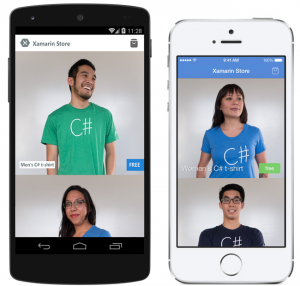
Xamarin
takes a special way; it regards the uniqueness of every platform and
does not force developers to make applications that have resemblance on
all platforms. Despite developers can use the native features over here.
Xamarin
in addition, not only the UI, has even an advantage of sharing code to
cross-platform. For instance, your code for getting to Web services can
be reused effortlessly on the iOS and Android platforms.
Additionally,
database code is likewise exceptionally compact. Xamarin’s methodology
is to let developers make UI that are special to every platform, and
after that make segments that can be reused effectively on another
platform.
Rather
than utilizing individual languages for different platforms, a binding
together language is required: C# was picked in light of the fact that
it’s everything but difficult to learn, and it’s the dialect of decision
for some .NET designers. Utilizing C# permits Xamarin to connect with a
large number of potential designers.
The IDE
assumes a vital part. A decent IDE empowers speeding up of any
improvement exertion. Xamarin offers the Xamarin Studio, which is a
world-class IDE that makes creating, troubleshooting, testing, and
bundling applications a stroll in the recreation center.

Xamarin Supported Platforms
To build iOS applications, you require a Mac or a sensible copy. Xamarin offers three wide decisions:
Use
Visual Studio on Windows. Utilizing Visual Studio, you can create iOS
and Android applications natively on your Windows PC. In any case, the
proviso here is that keeping in mind the end goal to test iOS
applications, you have to have admittance to an organized Mac, which
will give the fabricate and organization administrations.
Use
Xamarin Studio on Windows. Rather than Visual Studio, Xamarin gives its
own IDE: Xamarin Studio. Like Visual Studio, Xamarin Studio gives a
world-class advancement environment to quicken your improvement
exertion. Like choice earlier, testing iOS applications bound access to
an organized Mac.
Use
Xamarin Studio on a Mac. This is the best choice on the off chance that
you are creating applications for both iOS and Android. Xamarin Studio’s
close coordination with Xcode makes outlining and testing iOS
applications simple.
Working with Xamarin
You compose your UI code for every
particular platform one for Android and one for an iOS gadget. At that
point compose business rationale that can be reused on both platforms.
Xamarin
uncovered all APIs accessible in iOS and Android to your application as
general C# class libraries. Moreover, your applications have admittance
to a completely useful usage of the .NET runtime, which is packaged with
your application so that your code executes with all the force of C#
and .NET, for example, memory administration, and so on. When you are
prepared to accumulate the application for every platform, Xamarin
produces an ARM paired for iOS and exploits without a moment to spare
assemblage for Android. As Xamarin applications are incorporated to
native apps, they find themselves able to perform with no execution
corruption that you may anticipate from cross-platform applications.
source: Krify
Google New Logo Released
By
//
No comments:

Google said the new design would soon be seen across all its products. Google’s homepage introduced the redesign with an animation that wiped away the old logo and drew the new one.
“Google has changed a lot over the past 17 years – from the range of our products to the evolution of their look and feel. And today we’re changing things up once again,” the company said in a blogpost.
The company said the redesign was meant to reflect the way that people interact with Google products across many different platforms, apps and devices.
“It doesn’t simply tell you that you’re using Google, but also shows you how Google is working for you. For example, new elements like a colorful Google mic help you identify and interact with Google whether you’re talking, tapping or typing. Meanwhile, we’re bidding adieu to the little blue ‘g’ icon and replacing it with a four-color ‘G’ that matches the logo.”
The logo has undergone many, mainly small, changes in its history. The colours have changed, 3D letters have been flattened, and an exclamation point came and went in 1999.
The move comes just a month after a major restructuring of the company was unveiled. Google is now owned by Alphabet, a holding company created by founders Sergey Brin and Larry Page to separate their money-making search engine company from the loss-making, “moon shot” projects like robot cars, medical research and internet-delivering balloons.
source: Theguardian
source: Theguardian
Marshmallow Is the Official Name of Android M ( New Version)
By
//
No comments:
Develop a sweet spot for Marshmallow: Official Android 6.0 SDK & Final M Preview

Android 6.0 Marshmallow
Whether you like them straight out of the bag, roasted to a golden brown exterior with a molten center, or in fluff form, who doesn’t like marshmallows? We definitely like them! Since the launch of the M Developer Preview at Google I/O in May, we’ve enjoyed all of your participation and feedback. Today with the final Developer Preview update, we're introducing the official Android 6.0 SDK and opening Google Play for publishing your apps that target the new API level 23 in Android Marshmallow.
Get your apps ready for Android Marshmallow
The final Android 6.0 SDK is now available to download via the SDK Manager in Android Studio. With the Android 6.0 SDK you have access to the final Android APIs and the latest build tools so that you can target API 23. Once you have downloaded the Android 6.0 SDK into Android Studio, update your app projectcompileSdkVersion to 23 and you are ready to test your app with the new platform. You can also update your app to targetSdkVersion to 23 test out API 23 specific features like auto-backup and app permissions.Along with the Android 6.0 SDK, we also updated the Android Support Library to v23. The new Android Support library makes it easier to integrate many of the new platform APIs, such as permissions and fingerprint support, in a backwards-compatible manner. This release contains a number of new support libraries including: customtabs, percent, recommendation, preference-v7, preference-v14, and preference-leanback-v17.
Check your App Permissions
Along with the new platform features like fingerprint support and Doze power saving mode, Android Marshmallow features anew permissions model that streamlines the app install and update process. To give users this flexibility and to make sure your app behaves as expected when an Android Marshmallow user disables a specific permission, it’s important that you update your app to target API 23, and test the app thoroughly with Android Marshmallow users.How to Get the Update
The Android emulator system images and developer preview system images have been updated for supported Nexus devices (Nexus 5, Nexus 6, Nexus 9 & Nexus Player) to help with your testing. You can download the device system images from the developer preview site. Also, similar to the previous developer update, supported Nexus devices will receive an Over-the-Air (OTA) update over the next couple days.Although the Android 6.0 SDK is final, the devices system images are still developer preview versions. The preview images are near final but they are not intended for consumer use. Remember that when Android 6.0 Marshmallow launches to the public later this fall, you'll need to manually re-flash your device to a factory image to continue to receive consumer OTA updates for your Nexus device.
What is New
Compared to the previous developer preview update, you will find this final API update fairly incremental. You can check out all the API differences here, but a few of the changes since the last developer update include:- Android Platform Change:
- Final Permissions User Interface — we updated the permissions user interface and enhanced some of the permissions behavior.
- API Change:
- Updates to the Fingerprint API — which enables better error reporting, better fingerprint enrollment experience, plus enumeration support for greater reliability.
Upload your Android Marshmallow apps to Google Play
Google Play is now ready to accept your API 23 apps via the Google Play Developer Console on all release channels (Alpha, Beta & Production). At the consumer launch this fall, the Google Play store will also be updated so that the app install and update process supports the new permissions model for apps using API 23.To make sure that your updated app runs well on Android Marshmallow and older versions, we recommend that you use Google Play’s newly improved beta testing feature to get early feedback, then do a staged rollout as you release the new version to all users.
Source: http://android-developers.blogspot.in/2015/08/m-developer-preview-3-final-sdk.html